Working Women: a Path to Success
23/03/2022

(This article originally appeared in Global Focus, EFMD’s Business Magazine, and has been republished on this website with the permission of EFMD.)
The past 10 years illustrate just how much has changed for women in business. Diversity and gender issues are these days often discussed at board level, which certainly was not the case in the recent past. We also see signs that getting more women to board level as well as into the talent pipeline are increasingly perceived as business-relevant issues. However, congratulations all round would be rather premature as challenges remain, not least the difficulties many women experience in reaching senior executive roles.
In their work at Ashridge (Hult International Business School), Fiona Dent and Viki Holton undertook a research study into the real-life issues for women in business today. The survey (of around 1,400 women) and the interviews identified a range of enablers and barriers for women’s career success. They found out that the main barriers that hold women back, the so-called ‘derailers’, are:
They also identified the key enablers for women’s careers, the so-called ‘multipliers’, including:
Interestingly, some of these issues, especially the derailers, have been around and talked about by working women for many years.
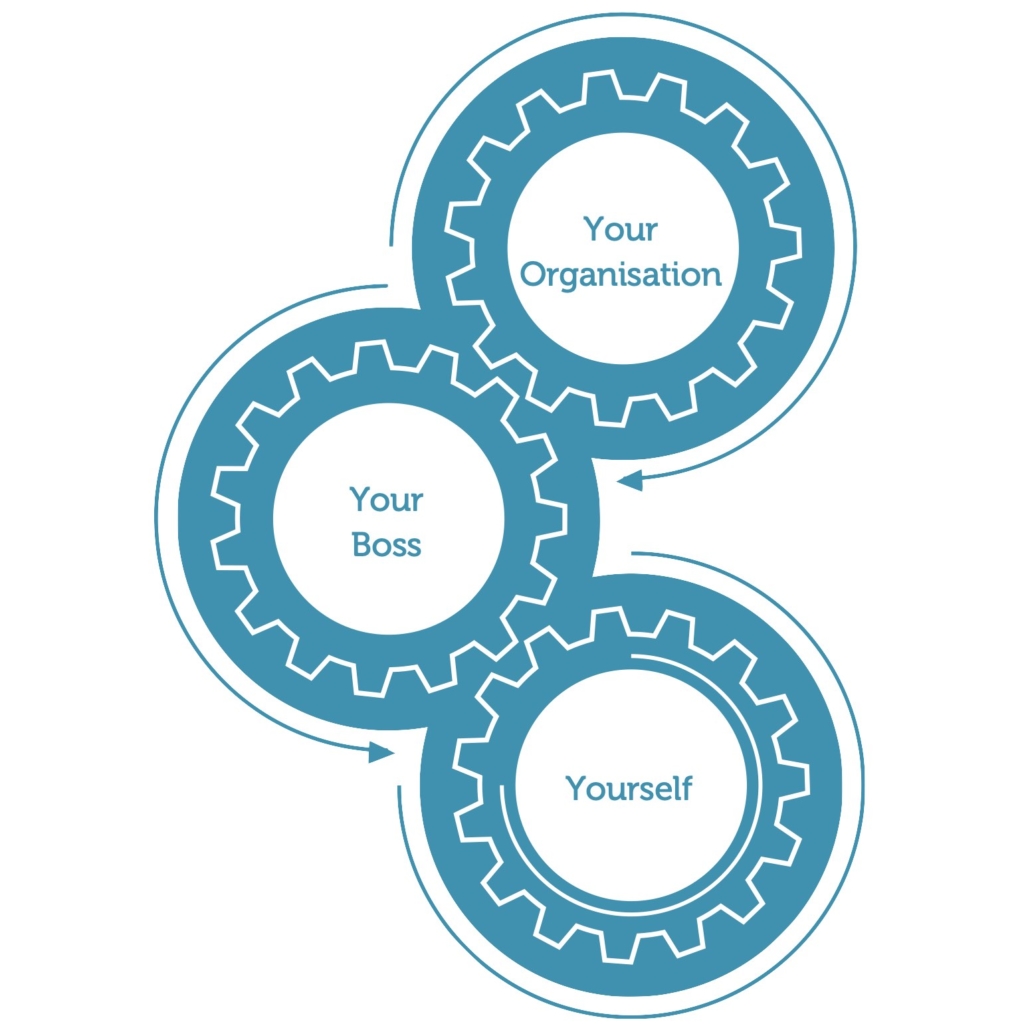
In this article, Dent and Holton offer women a number of practical tools, ideas and suggestions that will contribute to the management of their career success. They suggest three main areas for focus – Your Organisation, Your Boss, Yourself – which they call a ‘Recipe For Success’. The three areas are interconnected and should be aligned to ensure the greatest possible opportunities for effectiveness. Any working woman should focus on these when planning, managing and developing her career.
There is no doubt that the 21st century offers more choice than ever before for working women. However, it is also clear that many organisations are still not ready to offer complete parity to their female employees – the issue of equal opportunities, pay and conditions remains as alive today as it was in the past.
So, what should you look for in an organisation to at least ensure you are joining a truly ‘equal opportunity employer’? First, look at the make-up of the board and the senior management team. What percentage of women hold senior roles? Higher than 35% is good news – yes, it does seem low but it’s better than many organisations.
Second, talk to people about development opportunities offered to staff – how many women:
Getting a feel for these areas will give you an idea of the level of seriousness about women’s careers in the organisation.
Third, identify the support mechanisms available for women. Is there an official women’s network? Are women offered coaching or mentoring? And who are the main female role models in the organisation? What roles are they in? What managerial level do they operate at?
Think about the boss. Are they supportive? Do they challenge women in a positive way to go further and step up to the next challenge? Or is the boss someone who women cannot learn from and is maybe even holding people back? Does the boss act as a coach, mentor or sponsor development and progress?
Each of these roles is different, of course. As a coach, a boss would be developmentally focused, offering support and challenges with the skills to help people develop further than they might otherwise be capable of. As a mentor, a boss will share his/her experience and offer support and guidance. As a sponsor, the boss will endorse a person’s capabilities and potential with others. Each and any of these roles will be beneficial for an individual’s career future.
There are no two ways about it. You, the individual, are the single most important person when it comes to managing your working life and career. No-one else will do it for you. So, make a plan. Set career goals and think through how these might be achieved. Remember, plans and goals can and do change but without a plan you are simply wandering around aimlessly.
The second area is to think about the impression you are having on others. Awareness of and managing the impression you create will contribute towards reputational development and will help to build organisational and career credibility. Some of the other areas to work on that will help with impression creation are:
This not only makes people more aware of you but it will mean that you may well get the chance to take on new opportunities.
One additional capability that seems to be a general issue for 21st century working is being resilient. Almost all of us have experienced stress and pressure and yet we often under estimate the value of learning about resilience and how to cope well at such times. Resilience is a skill-set that can be learned and improved upon.
While women can now make progress and create better career futures for themselves, companies must also take responsibility. Some companies are doing great things but there are many more who simply ‘need to do better’. Research has highlighted how important it is for organisations to create better policies and show more commitment to equality issues. Other studies have focused on individual issues. Both companies and individuals need to be more focused, more strategic, and look at ways to provide practical and flexible solutions.
The need to build high levels of resilience, to create a culture that values the manager as coach and an organisation that actively promotes diversity at all levels will generate more opportunities for women (and men) to personally grow and develop, and to contribute to the success of their organisation. This is surely a ‘win-win’ solution to meet the challenges and demands of the 21st century.
Does your company:
In addition to this brief audit, another very simple way to measure diversity and gender issues is to ask women working in the business the following questions:
This is an adapted version of an article that was published on EFMD’s website, written by Fiona Dent – Professor of Practice at Ashridge Executive Education, Hult International Business School – and Viki Holton – Adjunct Senior Research Fellow at Ashridge Executive Education, Hult International Business School.
 https://umio-prime.nl/wp-content/uploads/2022/02/The-Changing-Role-of-the-Leader.jpg
800
1920
UMIO Prime
https://umio-prime.nl/wp-content/uploads/2019/10/No-logo.png
UMIO Prime2022-02-07 07:00:002022-02-04 14:34:27The Changing Role of the Leader
https://umio-prime.nl/wp-content/uploads/2022/02/The-Changing-Role-of-the-Leader.jpg
800
1920
UMIO Prime
https://umio-prime.nl/wp-content/uploads/2019/10/No-logo.png
UMIO Prime2022-02-07 07:00:002022-02-04 14:34:27The Changing Role of the Leader https://umio-prime.nl/wp-content/uploads/2022/01/Why-we-Need-More-Women-in-Leadership.jpg
800
1920
UMIO Prime
https://umio-prime.nl/wp-content/uploads/2019/10/No-logo.png
UMIO Prime2022-01-13 07:00:002022-01-13 10:19:18Why we Need More Women in Leadership
https://umio-prime.nl/wp-content/uploads/2022/01/Why-we-Need-More-Women-in-Leadership.jpg
800
1920
UMIO Prime
https://umio-prime.nl/wp-content/uploads/2019/10/No-logo.png
UMIO Prime2022-01-13 07:00:002022-01-13 10:19:18Why we Need More Women in Leadership https://umio-prime.nl/wp-content/uploads/2021/11/Co-CEOs-can-Redefine-our-Expectations-of-Businesses.jpg
800
1920
UMIO Prime
https://umio-prime.nl/wp-content/uploads/2019/10/No-logo.png
UMIO Prime2021-11-24 16:36:062021-11-24 16:36:08Co-CEOs can Redefine our Expectations of Businesses
https://umio-prime.nl/wp-content/uploads/2021/11/Co-CEOs-can-Redefine-our-Expectations-of-Businesses.jpg
800
1920
UMIO Prime
https://umio-prime.nl/wp-content/uploads/2019/10/No-logo.png
UMIO Prime2021-11-24 16:36:062021-11-24 16:36:08Co-CEOs can Redefine our Expectations of BusinessesBecome a member of UMIO Prime if you want access to content that goes beyond the collection we are showing here. It is simple, fast and free of charge!
Become a member of UMIO Prime if you want access to content that goes beyond the collection we are showing here. It is simple, fast and free of charge!

